
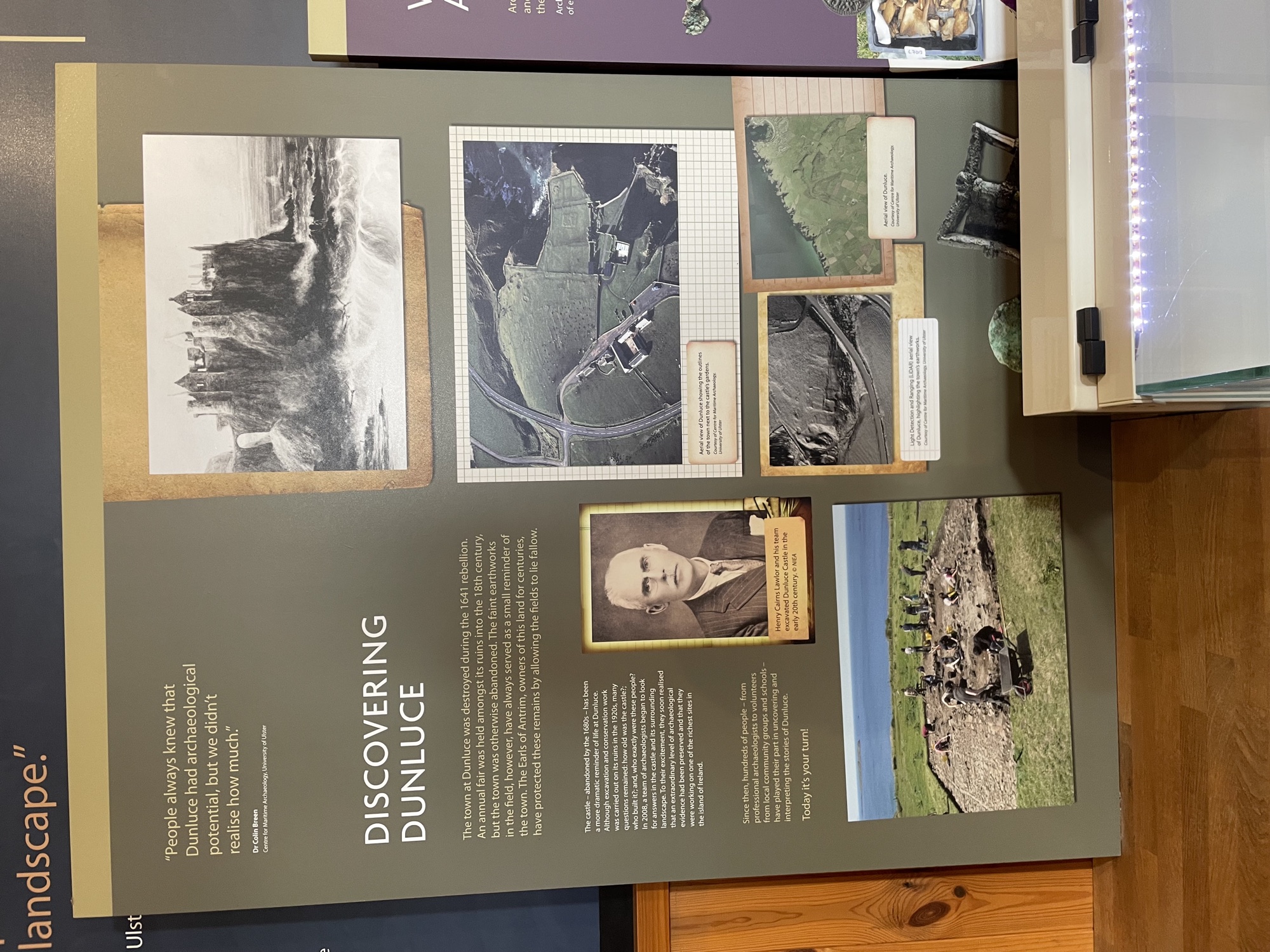
Dunluce Castle sits on a headland on the Causeway Coast, between Portrush and the Giant’s Causeway. It’s a genuine ruin — no roof, no floors in most of it — perched dramatically on cliffs with the sea on three sides.
A real history, not a simple one
The earliest structure on the site dates to the 13th century, associated with Richard Óg de Burgh, 2nd Earl of Ulster. The castle most visitors see today, though, is largely the work of the MacDonnell clan, who took the site in the 16th century. Sorley Boy MacDonnell held it through repeated conflict with English forces, and his descendant Randal MacDonnell, 1st Earl of Antrim, expanded it further — around 1608 he laid out a planned town beside the castle, with streets and even indoor toilets, unusually sophisticated for the period. Little of that town survives above ground now.
The kitchen-collapse story: local legend holds that part of the castle — including the kitchen — fell into the sea during a storm in 1639, killing several of the kitchen staff. It’s a genuinely old story, but it’s a legend rather than a documented event: paintings from the early 1800s still show that section of the castle standing. Worth knowing if you hear it told as straight fact on a tour.
Visiting
- Location: on the Causeway Coastal Route, between Portrush and Bushmills.
- Access: a visitor centre sits opposite the castle with ticketing and a small exhibition. The castle grounds themselves involve uneven, ruined stonework — sensible footwear matters, and supervise children closely near the cliff edges.
- Nearby: Bushmills and the Giant’s Causeway are both a short drive away, making Dunluce an easy stop on the same trip.
In fiction
Dunluce is widely cited as an inspiration for Cair Paravel in C.S. Lewis’s Chronicles of Narnia — Lewis grew up in Belfast and knew the Antrim coast well, though there’s no single confirmed statement from him naming Dunluce specifically. It’s also appeared on screen as House Greyjoy’s seat in Game of Thrones.